
The History of Archery in Korea
Prehistoric Archery
Fig 1 Mandrin E. Lithic points. Size comparison with a 1 euro cent coin (diameter: 16.25 mm). |
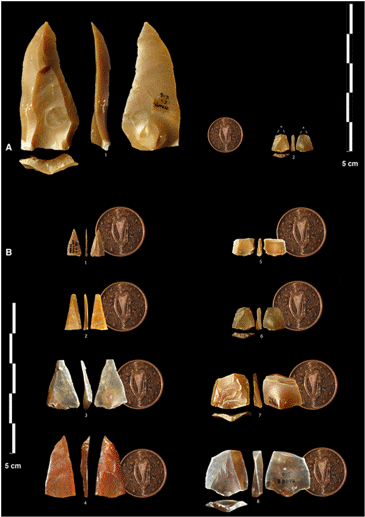
Archery is a shared cultural heritage of humanity. The bow and arrow were originally essential tools for survival and hunting, appearing as early as the Late Paleolithic period. According to a 2023 study of the Grotte Mandrin site in France, research suggests that humans first began using bows and arrows approximately 54,000 years ago. (Metz, L., Lewis, J. E., & Slimak, L. (2023). Bow-and-arrow, technology of the first modern humans in Europe 54,000 years ago at Mandrin. Science Advances, 9(8). https://www.science.org/doi/10.1126/sciadv.add4675)
|
||||
Bow-and-arrow technology of the first modern humans in Europe 54,000 years ago at Mandrin. Science Advances).
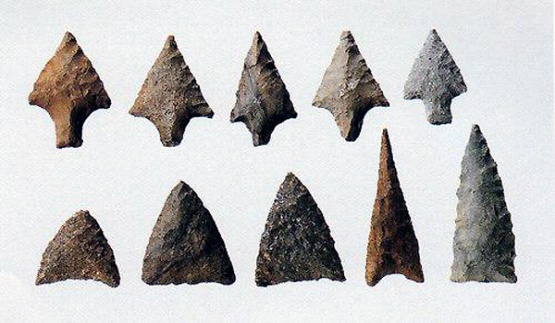
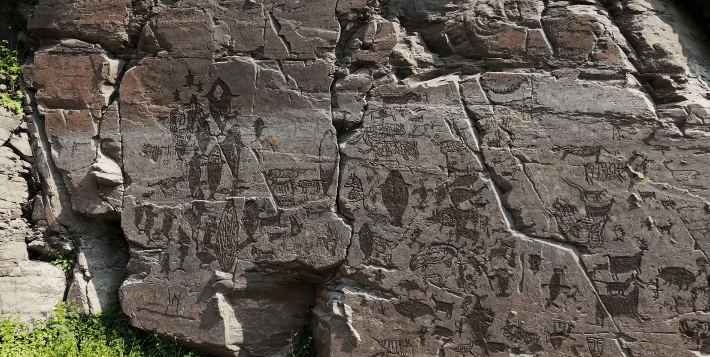
Archaeological research on bows has been limited because they were primarily made of organic materials, leading to a scarcity of surviving artifacts. However, bifacial stone arrowheads from the late Paleolithic period have been excavated at various sites in Korea, including Ojiri in Gokseong, Seoduri in Iksan, Sinchong in Gwangju, and Gagok in Mangsang, Donghae. Stone arrowheads dating back approximately 10,000 years were discovered at the Gosan-ri Neolithic site on Jeju Island. Over 200 arrowheads were found at this site alone, displaying a greater variety of shapes and sizes than any other Neolithic site on the Korean Peninsula. The oldest Neolithic depictions of archery on the Korean Peninsula are found in the petroglyphs of Bangucheon, Ulju-gun, Ulsan. Dating back approximately 7,000 years, these carvings on a rock face (approx. 8m wide and 5m high) vividly illustrate archery scenes.
|
||||||||||||
Figure 4 Archery Scenes in Petroglyphs (Detailed) Re-cited from <Collection of Drawings of the Bangucheon Petroglyphs> by Choi Hyun-sook (2023) |

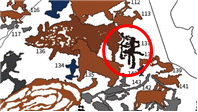


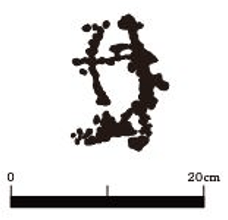
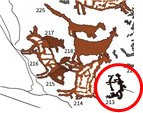
The Bangucheon Petroglyphs were designated as a UNESCO World Heritage site in 2025. Based on 3D precision scanning conducted by Ulsan City in 2022, four figures depicted as archers in the Bangucheon Petroglyphs were analyzed. Their dimensions were recorded as 11.4×17.8cm, 15.6×18.5cm, 10.0×14.0cm, and 43.3×31.3cm.
2. Archery in the Period of Tribal States
In the historical era characterized by the use of writing, archery served as a primary means of warfare and a crucial method for selecting talented individuals. During the period of tribal states—including Gojoseon, Buyeo, Eumnu (挹婁), Suksin (肅愼), Malgal (靺鞨), Ye (濊), as well as Mahan, Jinhan, and Byeonhan—archery occupied a dominant position in both hunting and war. While direct records of archery in Gojoseon are scarce, numerous accounts regarding bows and arrows in Buyeo, Eumnu, Dongye, and Suksin appear in Chinese historical texts.
The bows and arrows of the tribal states were known by names such as Gakgung (horn bow), Dangung (short bow/sandalwood bow), and Maekgung. According to the "Eumnu" section in the Records of the Three Kingdoms (Sanguozhi), "Book of Wei, Biographies of the Dongyi," it is stated: “The bow is four feet long and its power is equal to that of a crossbow. The arrows are made of hu (jujube/stiff wood), one foot eight inches long, with green stone arrowheads. This is the ancient land of the Suksin people. They are skilled in archery; when they shoot at a person, they never miss.” (其弓長四尺, 力如弩, 矢用楛, 長尺八寸, 靑石爲鏃, 古之肅愼氏之國也. 善射, 射人皆入.) The Book of Jin (Jinshu) mentions that Suksin, also known as Eumnu, possessed "a short bow (Dangung) measuring three feet five inches" (檀弓三尺五寸). Regarding Dongye, located in the present-day Wonsan area, both the Records of the Three Kingdoms and the Book of the Later Han (Houhanshu) note: “The Dangung of Nakrang is produced in that region” (樂浪檀弓出其地). The Mulgil (勿吉) people, also known as Malgal, were subjugated by Goguryeo in 494 AD. The History of Northern Dynasties (Beishi) records: “The people are all excellent archers and make their living by hunting. Their horn bows (Gakgung) are three feet long, and their arrows are one foot two inches long” (人皆善射, 以射獵爲業. 角弓長三尺, 箭長尺二寸).
3. Archery in the Three Kingdoms and Unified Silla Periods
The Three Kingdoms period began with the founding of Silla (57 BC), Goguryeo (37 BC), and Baekje (18 BC), lasting about 700 years until the falls of Baekje (660 AD) and Goguryeo (668 AD). Historically, this era is defined by the establishment of centralized ancient states around 370 AD under King Sosurim of Goguryeo, King Geunchogo of Baekje, and King Naemul of Silla.
Goguryeo: The Nation of Master Archers
Goguryeo’s founder was Jumong, a name that literally means "master archer." Every year on March 3rd, a large-scale hunting contest was held at Nakrang Hill. Educational institutions called Gyeongdang (扃堂) played a vital role in training talent; according to the Old Book of Tang (Jiu Tangshu), unmarried youths stayed at these schools "studying and practicing archery day and night" (晝夜於此讀書習射).
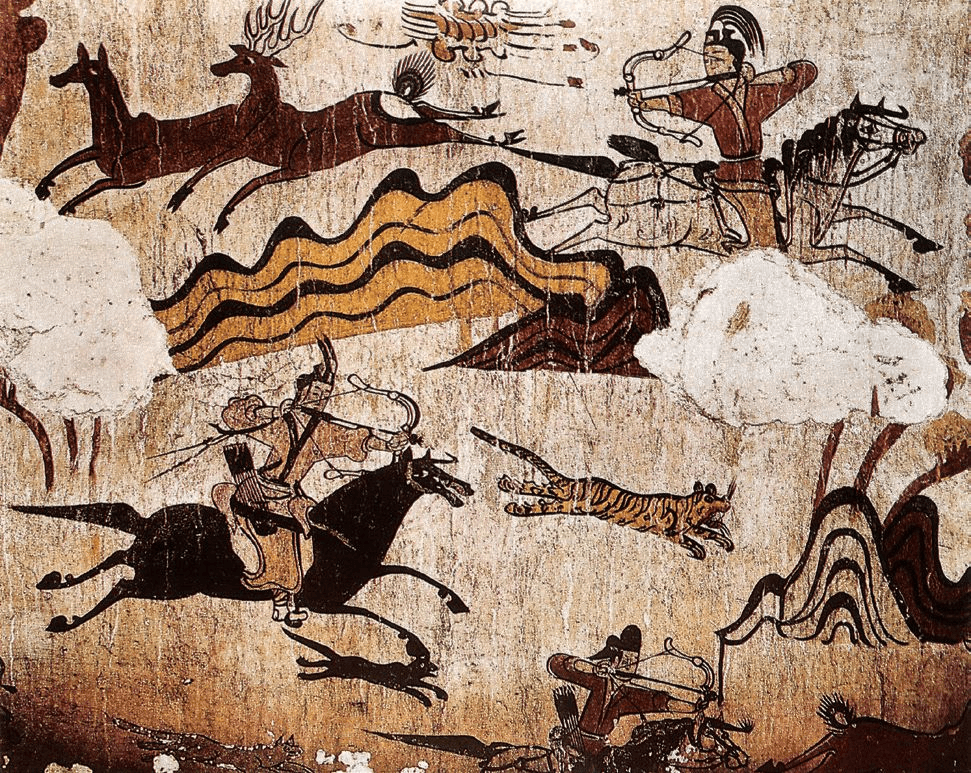
The Muyongchong (Tomb of the Dancers) mural, estimated to be from the late 4th to mid-5th century and designated as a UNESCO World Heritage site in 2004, features a famous hunting scene (Suryeopdo). This painting masterfully captures the dynamic, high-stakes pursuit between mounted warriors and wild animals.
|
Figure 5 The Hunting Mural of Muyongchong (Tomb of the Dancers) |
|
Figure 6 the Deokheung-ri Tomb depicts Masahui (Horseback Archery Competition |
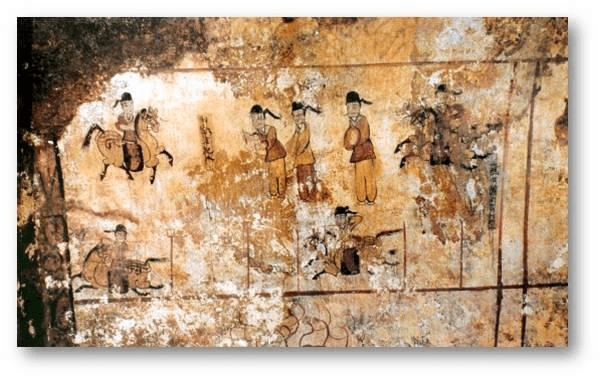
Another significant mural is found in the Deokheung-ri Tomb (409 AD), which depicts Masahui (Horseback Archery Competition). On the far right, an inscription reads "Seowon Masahui" (Horseback Archery at the Western Garden). It shows four mounted warriors taking turns shooting at five targets, while a scorer (Sahuijugiin) records their results with a brush. One rider is seen performing a Parthian Shot—turning his body backward to shoot while galloping—a technique famously used by the ancient Parthian Empire (247 BC–226 AD) against Rome.
Baekje: Royal Traditions and Refined Technique
|
Figure 7 Mounted Archer on the Great Gilt-Bronze Incense Burner of Baekje |
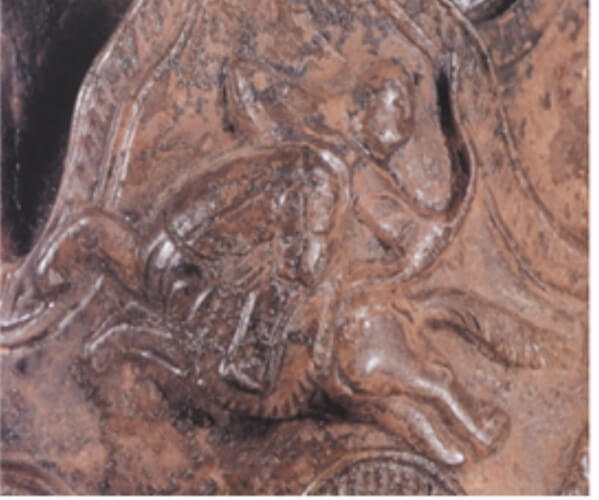
The Great Gilt-Bronze Incense Burner of Baekje features a relief of a mounted warrior. In this depiction, both the rider's body and the horse's head are turned in opposite directions, showcasing the advanced "Parthian Shot" technique.
Records in the Samguk Sagi (History of the Three Kingdoms) confirm that archery was a state affair. In 242 AD, King Goi "went to the West Gate to watch archery" (秋七月, 出西門觀射), and in 320 AD, King Biryu "built an archery platform west of the palace and practiced archery every new moon and full moon" (秋八月, 築射䑓於宫西, 每以朔望習射). The modern tradition of holding monthly archery club meetings called Sakhoe (New Moon Meeting) can be traced back to this era.
Silla and Unified Silla: Specialized Units and Visual Records
|
Fig 8 Cheonjeon-ri Inscriptions and Petroglyphs (Ulju): |
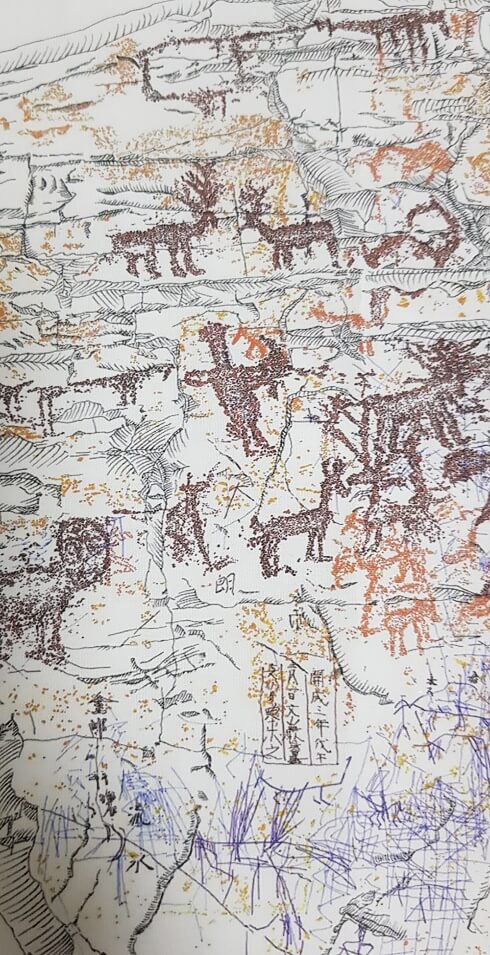
According to the Samguk Sagi, Silla had 23 military units, the 21st of which was the Igung (Double-Bow Unit), also known as the Oegung (Outer-Bow Unit). These units consisted of specialized archers called Gungcheok (弓尺). Lee Jung-hwa, author of The Archery of Joseon (1929), noted that Gungcheok is an archaic term for "archer."
|
Figure 9 Mounted Procession Scene on Pottery from Jjoksaem Tomb No. 44 (Silla Period) |
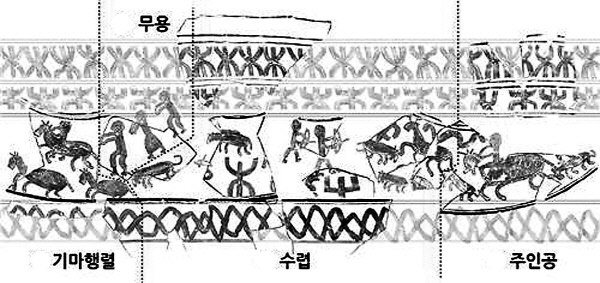
Archaeological evidence includes:
A figure is depicted archery hunting, with the arrow and the draw hand aligned horizontally, indicating a shot at a nearby target.
Jjoksaem Tomb No. 44 (Gyeongju): Pottery from this 4th–6th century tomb features a procession and a hunting scene. Two figures hold bows that are depicted as very small, similar to the composite Gakgung (horn bow).
|
Figure 10 Hunting Pattern Brick Fragment of Gyeonju |
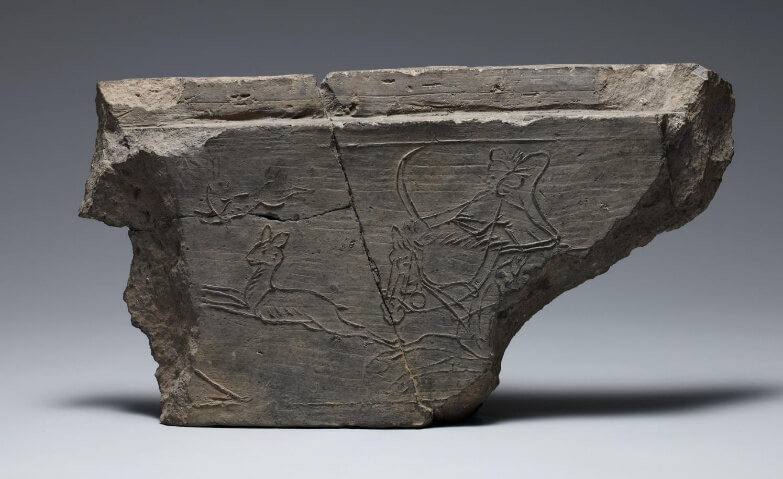
Hunting Pattern Brick (Gyeongju): A brick fragment (Suryeopmun-jeon) realistically depicts a warrior chasing a deer on a galloping horse, with the horse's mane fluttering and the warrior drawing his bow in a vivid display of motion.
4. Archery in the Goryeo Dynasty
During the Goryeo Dynasty, the nation faced continuous conflicts and confrontations with neighboring powers such as the Liao (Khitan), Yuan (Mongol), Ming, Jin (Jurchen), and Wa (Japanese). Consequently, archery remained a vital martial art and was further formalized as a state institution.
|
Figure 11 Archery Terms in the Gyerim Yusa (1103 AD) |
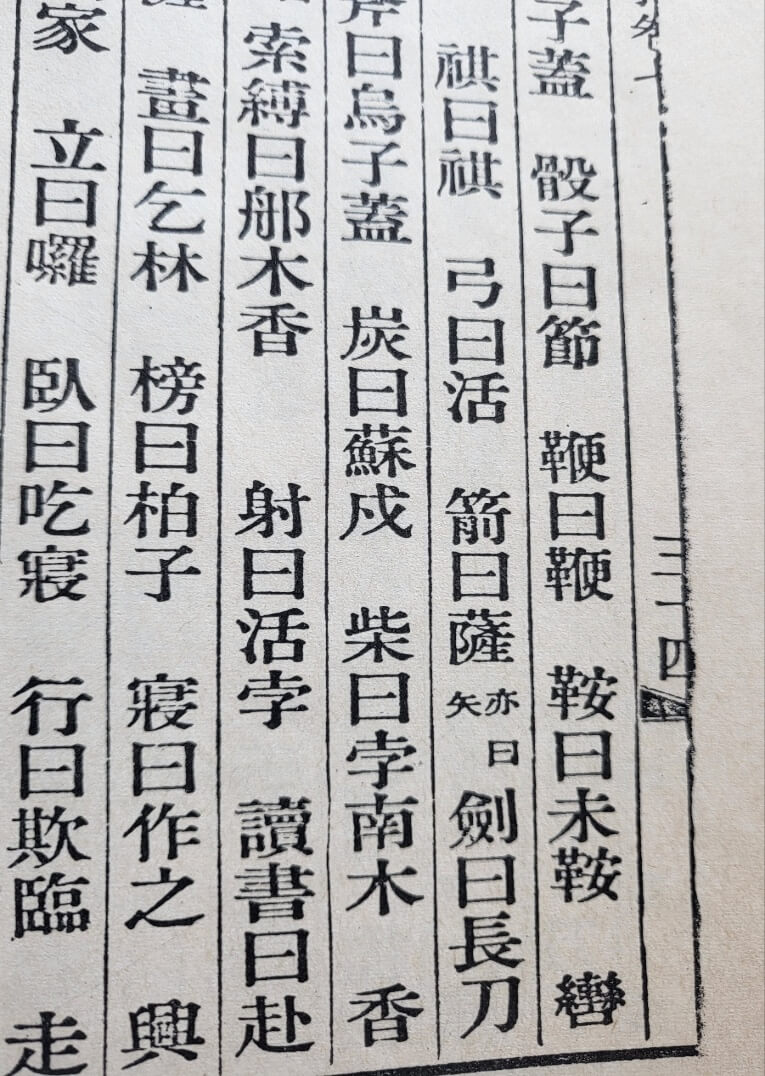
Goryeo's early military system consisted of a central army (Two Armies and Six Guards) and provincial forces (Juhyeongun). Beyond these regular formations, special units known as Byeolhojeban (Special Task Corps) were organized. These included specialized divisions dedicated to bows and crossbows, such as: Gyeonggung (梗弓) and Sagung (射弓): Archers using stiff or standard bows. Jeongno (精弩) and Gangno (剛弩): Elite crossbowmen and heavy crossbow units.
Within the Five Armies (Ogun), there were commanders (Doryeong) specifically for the Left and Right Gyeonggung units.
In 1103 (the 8th year of King Sukjong), Sun Mu (孫穆), a Song Dynasty official who visited Goryeo, wrote in his travelogue Gyerim Yusa (鷄林類事): “The bow is called 'Hwal' (弓曰活), and shooting is called 'Hwalssoa' (射曰活索).” This provides a valuable phonetic glimpse into the early Korean language.
Archery training was strictly regulated at the local level. In various provinces (Ju) and garrisons (Jin), archery and crossbow practice took place during the agricultural off-season on Yugail (the six days of government assembly). Local officials were ordered to supervise these sessions personally.
Standards for Appointment: Targets were set at 40 paces for bows and 50 paces for crossbows. Those who hit the target at least 5 times out of 10, or achieved consecutive hits, were granted official positions or promotions (Goryeosa, Military Records).
Goryeo-era archery equipment evolved from the foundations laid during the Three Kingdoms period, leading to a wider variety of specialized tools:
Bows: Along with the traditional Gakgung (horn bow), records mention the Jangeomgung (莊嚴弓), used for ceremonial display, and the Segung (細弓), a small bow used for firing slender arrows.
Arrows: The types of arrows became significantly more diverse compared to previous eras. These included: Gosi (jujube wood arrow), Jukjeon (bamboo arrow), Sejeon (slender arrow), Yujeon (willow arrow), Yuyeopjeon (willow-leaf arrow), Daeujeon (large-feathered arrow), and the famous Pyeonjeon (片箭, "baby arrow" or short arrow shot through a guide tube).
5. The History and Culture of Archery in the Joseon Dynasty
The formation of Korea's unique archery history and culture, distinct from other ethnic groups, is the result of several factors. These include the implementation of the military service examination (Mugwa), the practice of Saye (archery) as one of the "Six Arts" (Yuk-ye) – a Neo-Confucian virtue for the Yangban (literati class) – and the performance of national rituals such as Daesarye and Yeonsarye. Through these, archery was elevated to a political tool for public education and a formal state ceremony.
|
Figure 12 Records of "Hwal" and "Ssoda" in the Hunminjeongeum Haeryebon (1446) |
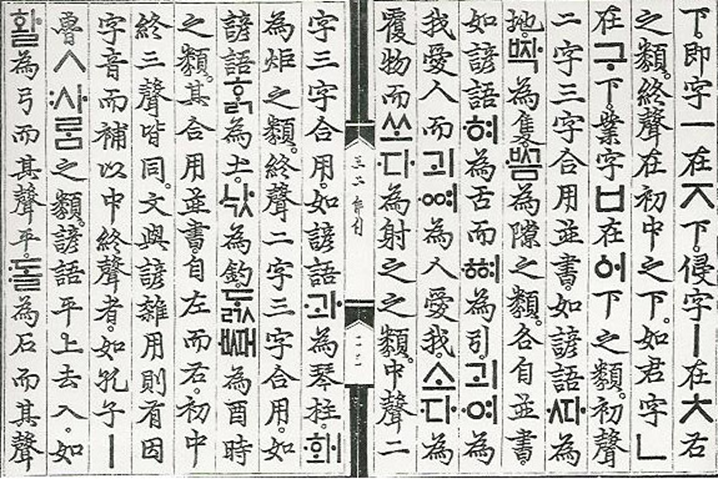
Archery in Joseon revolved around diverse formats such as Pyeonsa (team competitions), Gwanseol-sajeong (official archery pavilions established in military camps and palaces for military drills), and Private Sajeong (civilian pavilions). The latter served as training grounds for young men of Joseon who dreamed of social advancement through the military service examination.
The Korean name "Hwal-ssogi" (archery) has coexisted with the history of our bows. Records can be found in the Hunminjeongeum Haeryebon (1446), which notes that the word ssoda (to shoot) is used for types of archery (爲射之之類). Additionally, the phrase "playing music and shooting bows" appears in the Yeohun Eonhae (1630).
|
Figure 13 Subjects of the military service examination as seen in 『Sokdaejeon』 |
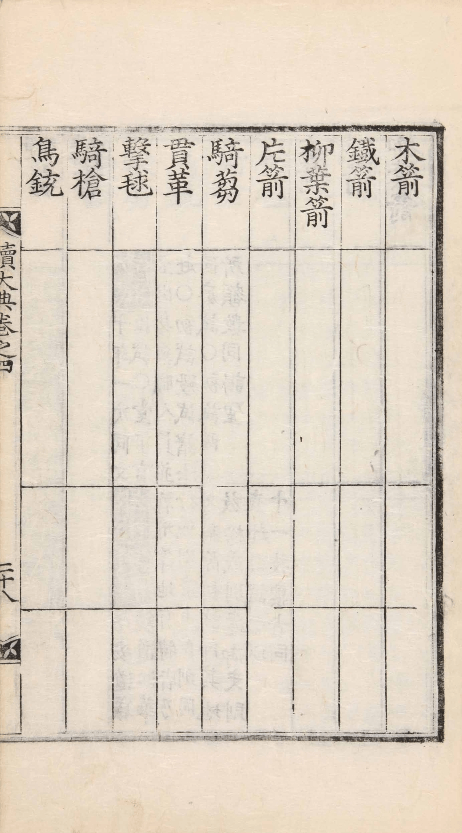
The most significant system contributing to the development of Joseon archery was the Mugwa. Along with the civil service exam (Munwa), it was a national system for selecting talented individuals. Starting in 1402 (2nd year of King Taejong), it was institutionally solidified in the Gyeongguk Daejeon (1485) and functioned as the representative military selection system for about 500 years until its abolition in 1894. Approximately 800 examinations were held during this period.
|
Figure 14 "Buk Saeseoneundo (Picture of the Northern 塞宣恩)" by Han Si-gak (時韓覺) |
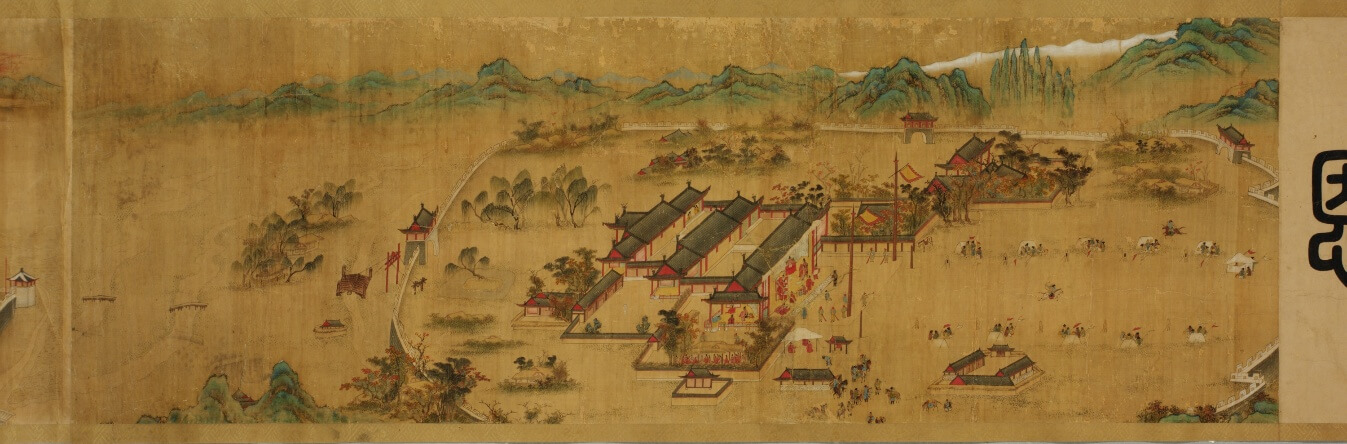
The subjects consisted of martial arts and theory. In the early Joseon period, the practical tests focused on six skills: Mokjeon (wooden arrow, 240 paces), Cheoljeon (iron arrow, 80 paces), Pyeonjeon (short arrow shot through a tube, 130+ paces), Gisa (mounted archery), Gichang (mounted spear), Gyeokgu (polo-like ball game).
In the mid-Joseon period, four more subjects were added: Yuyeopjeon (willow-leaf arrow, 120 paces), Gwanhyeok (leather target, 150 paces), Jochong (musket), and Pyeonchu (flail).
These exams were also held in the provinces. The Buksae Seoneun-do (1664) by Han Si-gak vividly depicts the civil and military examinations held in Gilju-mok, Hamgyeong-do, showing scenes of horse riding and archery in a spacious courtyard.
National Rituals: Daesarye and Hyangsarye
|
Figure 15 The scene where the king shoots an arrow in The Daesarye Uigwe (大射禮儀軌 / Record of the State Archery Ritual) |
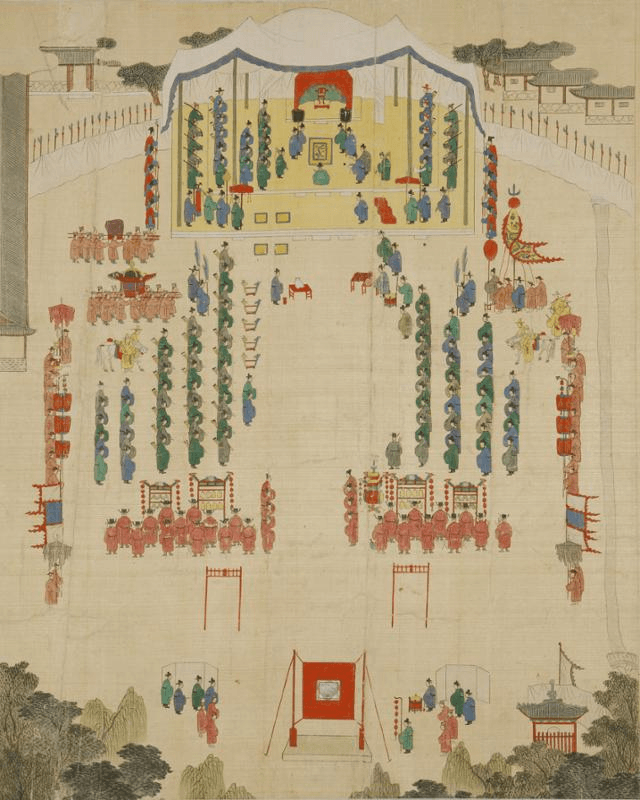
Archery was a method of cultivating a man's virtue, a way to train the mind and body, and a preparation for national emergencies.
Daesarye (Grand Archery Rite): A ceremony where the King and his officials shot bows together. It was first held in 1477. The Daesarye Uigwe provides detailed records of the King performing rituals at Sungkyunkwan and then proceeding to the archery platform.
Hyangsarye (Village Archery Rite): An annual event held in districts to promote respect for virtuous elders and foster a culture of courtesy and humility. It was institutionalized in the Orye-ui (Five Rites, 1474), which mandated the rite be held every March 3rd and September 9th.
In relation to Hyangsarye, the Sagye (archery guilds) developed. As the formal Hyangsarye weakened in the 17th century, the Sagye took over its role. Materials from these guilds remain in regions like Ganggyeong, Yeonggwang, and Yeongam, and their traditions still persist in some modern archery fields.
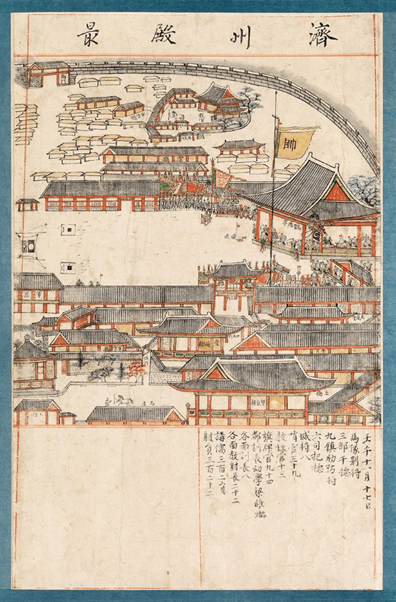
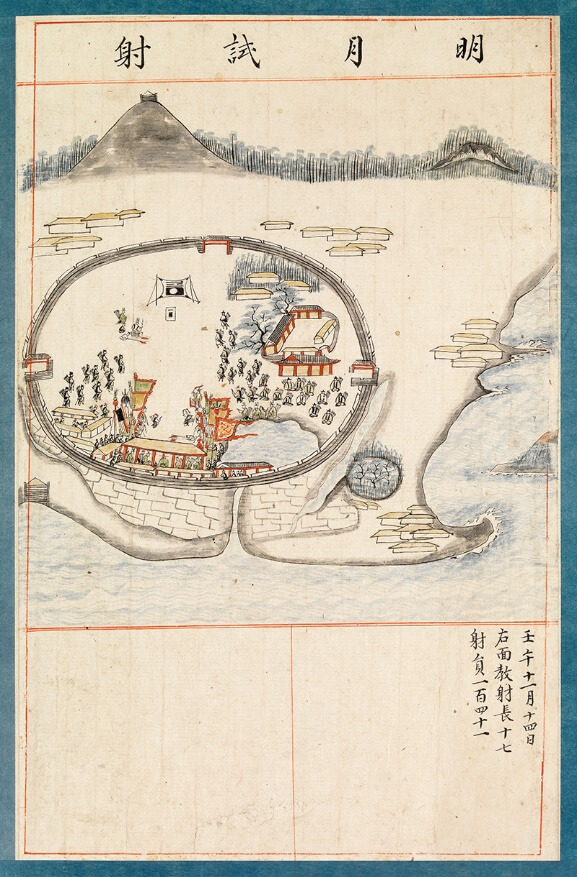
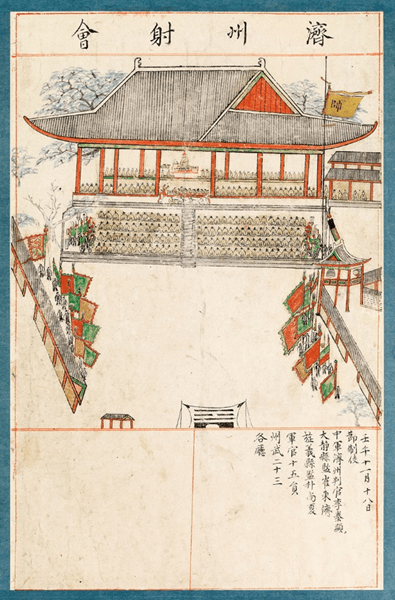
"Tamna Sullyeokdo (Album of Inspection Visits to Jeju)" is a documentary album commissioned in 1702 by Lee Hyeong-sang (1653–1733), the Magistrate of Jeju, and painted by the artist Kim Nam-gil. It depicts the magistrate's autumn inspection tours and various ceremonies held across Jeju Island. Consisting of 43 pages in total—including 41 illustrations and a two-page preface—the album provides specific and detailed insights into archery. Out of these, 18 illustrations are directly or indirectly related to archery: 8 depict actual shooting scenes, while 10 include archery-related facilities such as cloth targets (solpo) and wooden targets. In particular, the scenes titled "Myeongwol Sisa," "Cheonyeon Sahu," "Jeju Jeonchoe," and "Jeju Sahwa" vividly capture the practice of archery.
|
|
Figure 16 Archery Scene in The Tamra Sullyeok-do (1702) |
|
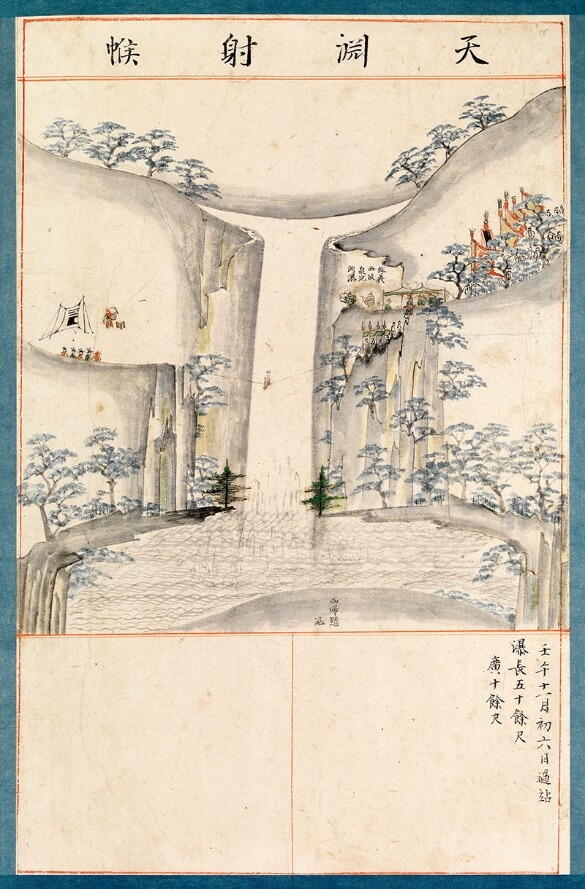
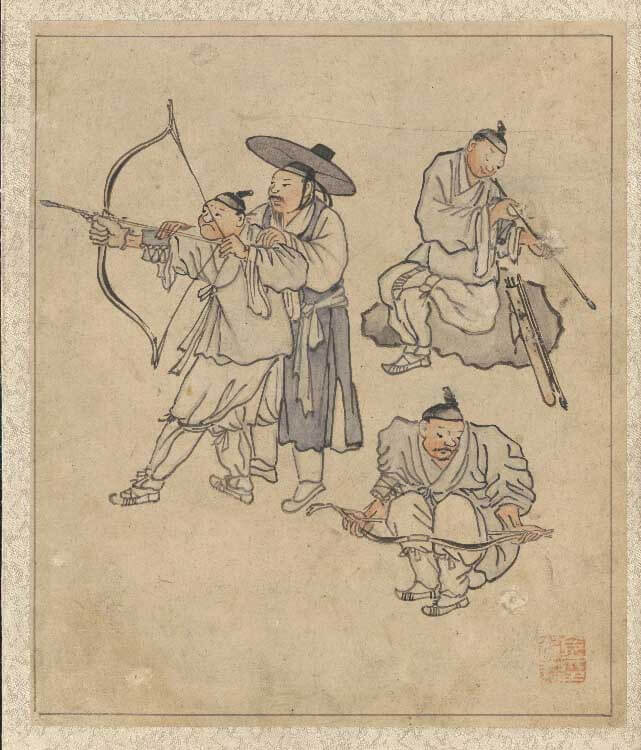
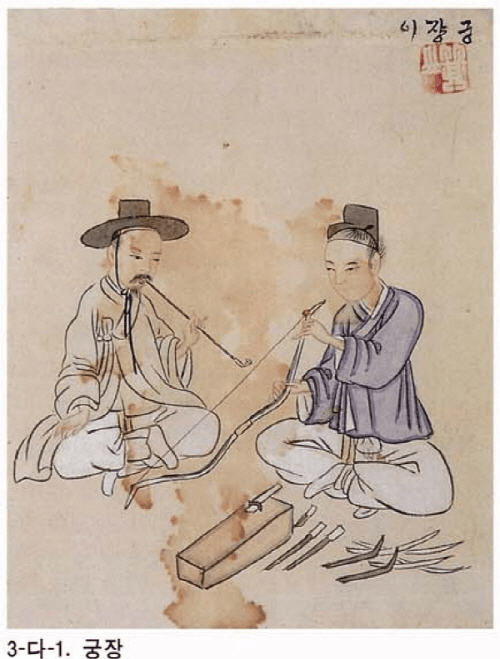
Archery during the Joseon Dynasty is also frequently featured in various genre paintings, most notably in Kim Hong-do’s "Sagung (Archery)."
|
Figure 17 Sagung, Kim hong-do |
|
Figure 18 Sainsayedo, Kang, hui-eon |

This masterpiece showcases the striking facial expressions and dynamic movements of young men learning the craft under a military officer, providing a detailed look at how people handled bows and arrows at the time. Similarly, Kang Hui-eon’s (1738–1784) "Sainsayedo (Scholars Practicing Archery)" offers a realistic portrayal of noblemen engaged in archery outdoors.
During this era, archery became established as a refined cultural tradition (pungryu) among the Yangban (literati class), who gathered at pavilions to compose poetry and shoot arrows. Among these traditions, "Jangan Pyeonsa"—a competition where archers from the three main districts of Hanyang showcased their skills—stood as the grandest and most spectacular display of martial prowess and communal festivity.
|
Figure 16 Shoots in the Gyeonggi-gamyeong-do (Painting of the Gyeonggi Provincial Office) |
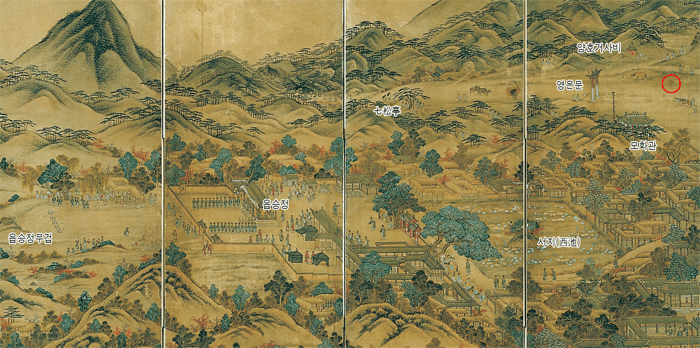
The Gyeonggi Gamyeong-do (18th century) shows archery at historical sites like Mohwagwan, where military exams were held. However, after the Japanese invasions (Imjin War), the bow's role as a primary weapon declined, and the system was ultimately reformed during the Gabo Reform (1894).
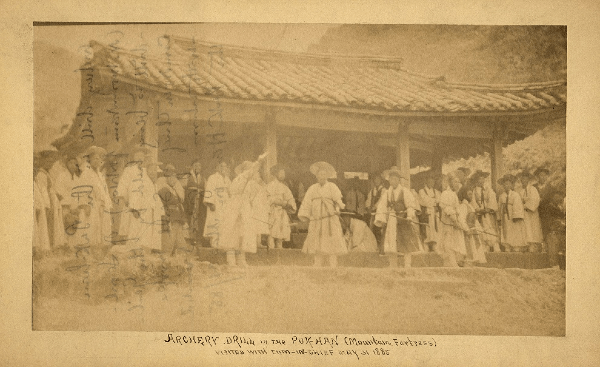
At the turn of the 20th century, artist Gisan Kim Jun-geun sold many folk paintings to foreigners. His work, including "Pyeonsahaki," is preserved in museums worldwide (Germany, France, USA, etc.). Furthermore, foreign residents like George Clayton Polk (US Charge d'Affaires) left photographic records of archery practice at Yeon-yungdae in 1885.
|
|
|
|
Figure 20 Shooting of Kim Jun-geun |
|

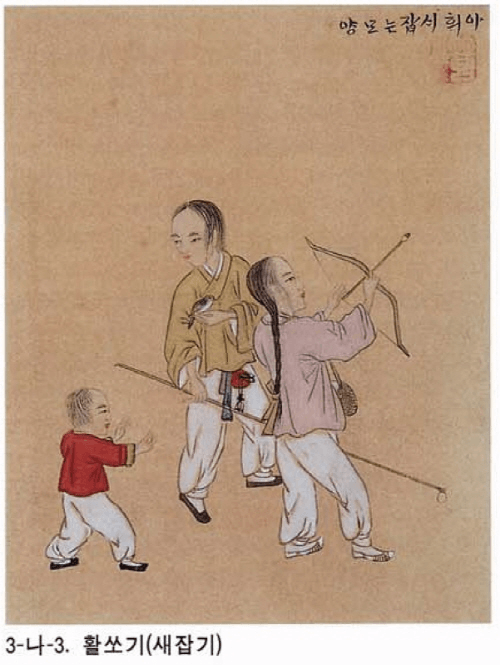

"During the Enlightenment Period, numerous foreigners, including missionaries, visited Korea and left behind various records of Korean archery. Among these is a photograph taken in 1885 by George Clayton Polk, the U.S. Chargé d'Affaires, titled 'Archery Practice at Yeonyungdae in Bukhansan.' Yeonyungdae was located behind Hongjimun Gate at the foot of Bukhansan Mountain, which corresponds to the present-day Sinyeong-dong area in Jongno-gu, Seoul."
|
Figure 21 Archery practice at Yeonyungdae, Bukhansan (1885) |
6. Archery Since the Modern Era
1) The Korean Empire Period
The abolition of the military service examination (Mugwa) during the Gabo Reform of 1894 dealt a critical blow to archery. It stripped young Joseon men of their hopes for social advancement through physical training, leading to a decline in passion for the craft and the subsequent closure of many private archery pavilions (Sajeong).
|
Figure 22 March 8, 1900, commemorating the official opening of Hwanghakjeong on Cheonchu-gyeongjeol (the birthday of the Crown Prince, later Emperor Sunjong) |
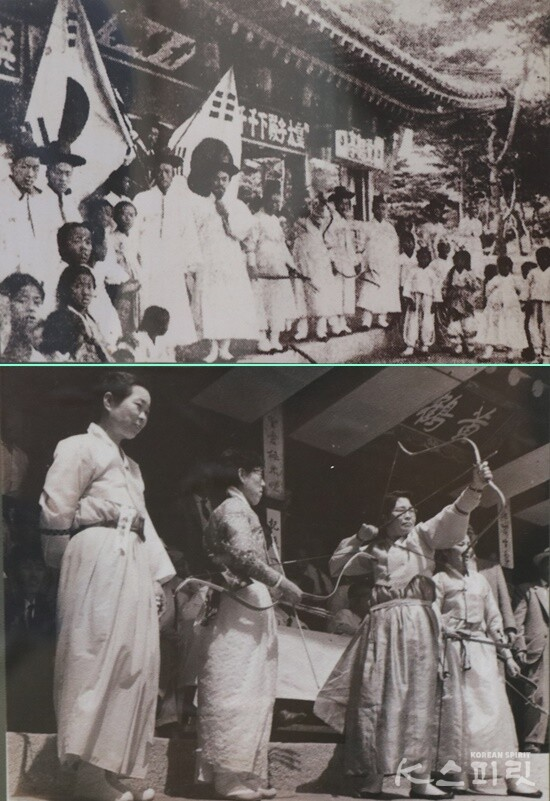
However, a turning point occurred when Emperor Gojong met Prince Heinrich of Prussia, who visited as a state guest. At the Prince's request to see Korea's traditional martial arts, an archery demonstration was held. The Prince’s high praise for its military and cultural utility deeply impressed Gojong, prompting him to strategically promote archery once again. According to a report by the interpreter L.W.F. Reinsdorf, the demonstration took place at Jungilgak (located at the present-day Blue House site), then known as the North Palace (Bukgyeol).
Following this, Min Young-hwan and Yi Jae-sun led the revival of the Hwanghakjeong and Cheongnyongjeong archery guilds. With the Emperor’s financial support (Naehajeon), an environment for revitalizing traditional archery organizations was established. In 1899, Hwanghakjeong was newly constructed on the northern slopes of Gyeonghui Palace as a training ground for the royal family, high-ranking officials, and the public. A photograph exists of its official opening on March 8, 1900, celebrating the Crown Prince's (later Emperor Sunjong) birthday.
As Gojong and other royals practiced at various pavilions such as Chuiunjeong and Baekhojeong, archery culture flourished nationwide. Approximately eight pavilions in the capital, including Seokhojeong and Namdeokjeong, were revived. During this modernization period, archery transitioned from an exclusive military skill to a means of physical fitness and a popular sport for the masses, moving beyond the confines of the Yangban class. In 1909, the Sagung-hoe (Archery Society) was founded by intellectuals and enthusiasts to protect this heritage under oppressive conditions.
2) The Japanese Colonial Period
"Although the 1910s, a period of brutal military rule by the Japanese Empire, is classified as the 'Dark Age' of modern Korean physical education, archery began to be systematically organized, centered around the Gwandeokhoe (Association for Observing Virtue). Following the March 1st Movement, the Japanese colonial government shifted its ruling strategy from coercive suppression to a so-called 'Cultural Policy.' During this time, major newspapers such as the Chosun Ilbo and Dong-a Ilbo actively sponsored various archery competitions. Consequently, while there were only five such events between 1910 and 1919, the number increased significantly in the 1920s. Starting with three major competitions in Ganggyeong, Gaeseong, and Suwon in 1920 alone, the frequency continued to rise steadily, with 14 events in 1921, 25 in 1924, and 29 by 1928."
|
|||||
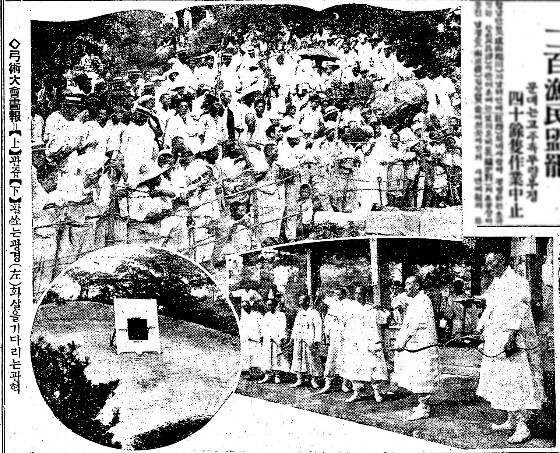
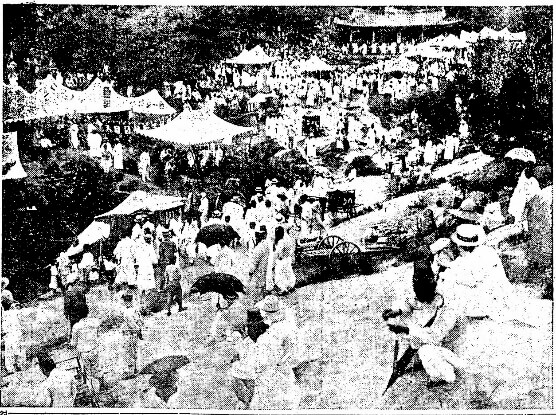
The article advocated for archery as a movement to improve women's physical health and revive the art.
|
Figure 24 Dong-Aha newspaper, on October 7, 1938 |
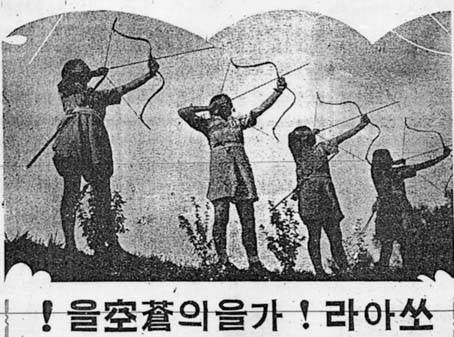
"Meanwhile, the 1920s saw a surge not only in men's archery competitions but also in numerous archery events for kisaeng (female entertainers), with co-ed tournaments beginning to take place nationwide. Notably, on October 7, 1938, the Dong-a Ilbo published a photograph titled 'Shoot! Into the Autumn Sky!' The accompanying article featured a student from Ewha Womans College, describing her delicate hands—metaphorically referred to as seom-seom-ok-su—engaging in the 'Archery Revival Movement.' The report emphasized the necessity of archery for women, framing it as a means to improve their physical health and stature."
|
Figure 25 Chosun-ui Gungsul (The Archery of Joseon |
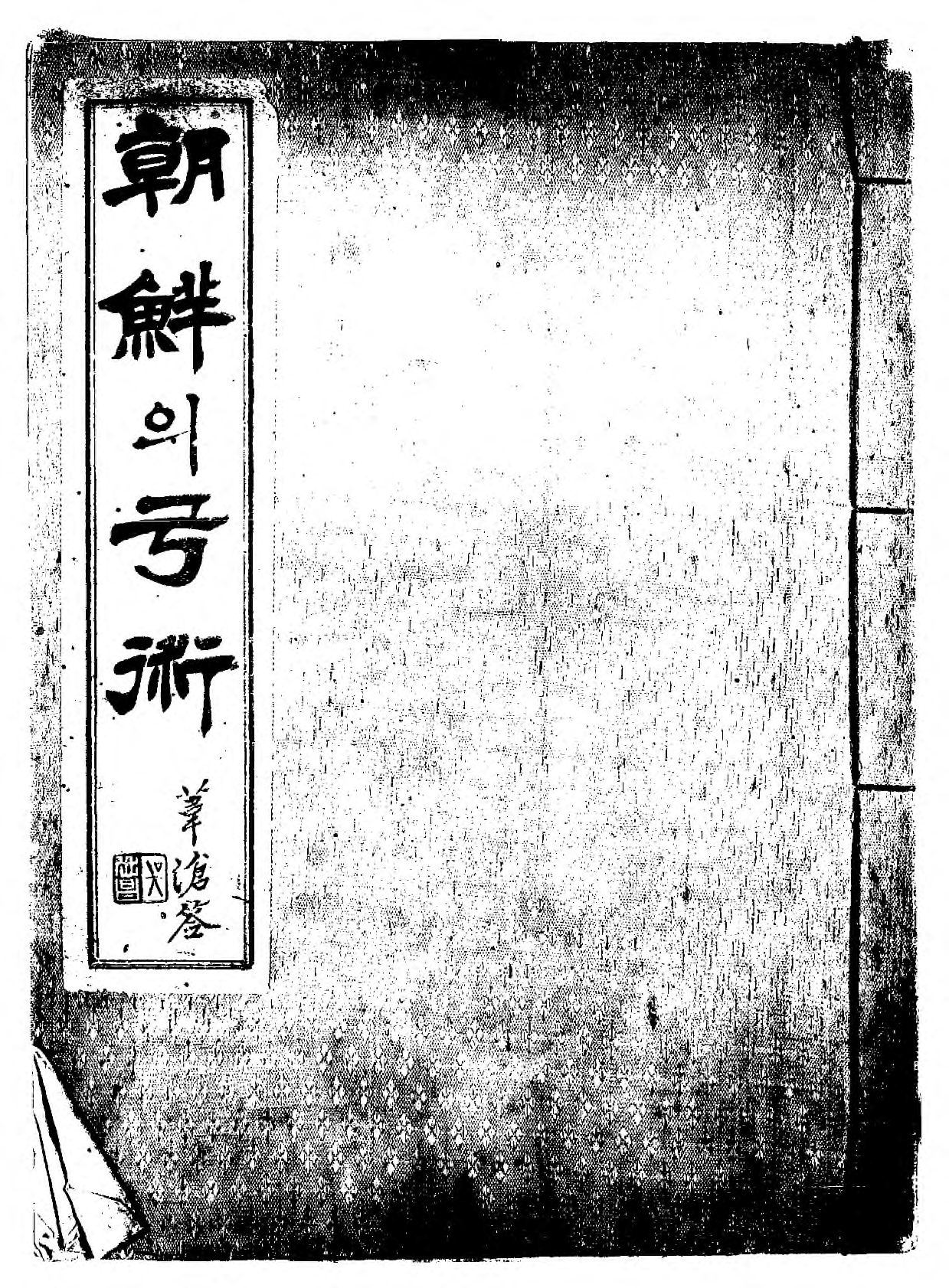
The culmination of these efforts was the All-Joseon Archery Tournament, hosted by Dong-A Ilbo at Hwanghakjeong starting July 14, 1928. Soon after, representatives from 14 pavilions in the Seoul and Gyeonggi areas founded the Joseon Archery Research Society (Chosun Gungsul Yeongu-hoe). This organization aimed to preserve the technical, philosophical, and cultural aspects of traditional archery. A monumental achievement of this society was the publication of The Archery of Joseon (Chosun-ui Gungsul, 1929) by the scholar Yi Jung-hwa, a definitive work that remains a masterpiece in the study of Korean archery.
7. Archery in the Republic of Korea
After Korea’s liberation, the Joseon Gungdo Association was revived and renamed the Korea Gungdo Association (KGA) in 1948 following the establishment of the Republic of Korea government. In 1954, Gungdo was officially adopted as an event in the National Sports Festival after the KGA joined the Korea Sports Council.
In 1963, Korea became a member of the International Archery Federation (FITA). To participate in international competitions, the KGA established a "Western Archery Committee." This period marked the linguistic distinction between Gukgung (traditional Korean archery) and Yanggung (Western archery). By the late 1970s, the introduction of improved bows made of synthetic materials like carbon expanded the potential for popularization and growth as a competitive sport.
|
Figure 26 Homepage of The Korea National Archery(Gungdo) Association (KGA) |
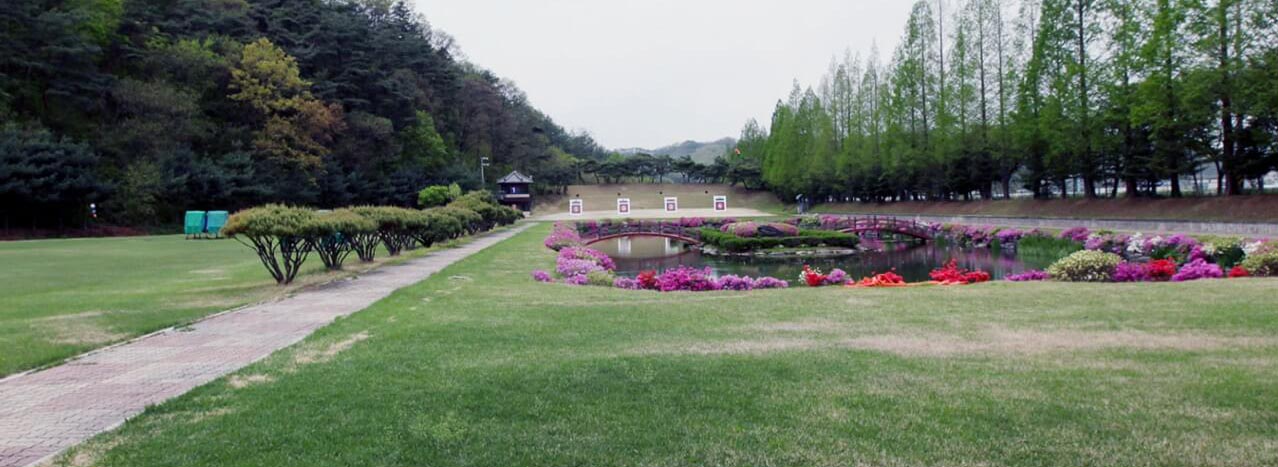
The KGA dedicated itself to discovering and nurturing archery talent until the founding of the Korea Archery Association in 1983. A major milestone occurred in 1979 when Kim Jin-ho, a student from Yecheon Girls' High School, won five gold medals at the 30th World Archery Championships in Berlin. Since then, South Korea has dominated the world rankings, securing 43 Olympic medals (27 Gold, 9 Silver, 7 Bronze). Notably, the South Korean Women’s Archery Team achieved a legendary 10th consecutive Olympic gold medal in the team event, spanning from the 1988 Seoul Olympics to the 2024 Paris Olympics.
The early 2000s saw a surge in public interest in leisure culture due to the implementation of local autonomy, the spread of the internet, and the introduction of the five-day workweek. This led to a new generation entering archery fields.
|
Figure 27 Jangan Pyeonsa-nori Public Competition at Seokhojeong Pavilion |

Online Communities: Platforms like the Gukgung Newspaper (2000) and clubs such as the Gukgung Culture Research Group and Onkkakji Gungsahoe were established.
Cultural Preservation: The Jangan Pyeonsa-nori, a traditional team competition in Seoul, was designated as a Seoul Metropolitan Intangible Cultural Heritage in 2000 and continues to be reenacted today (most recently at Seokhojeong in 2025).
|
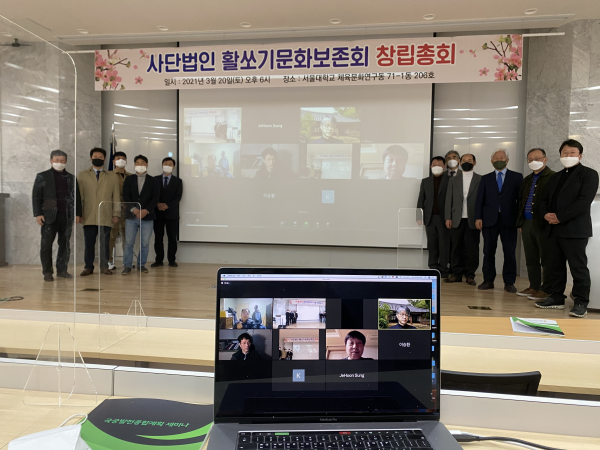
Fogure 28 Establishment of the Korea the Korea Traditional Archery Culture society |
International Exchange: The World Traditional Archery Festival was held from 2007 to 2015 to promote Korean archery globally, a tradition revived in 2025 as the Ulsan World Archery Festival.
Archery has also found a strong foothold in universities. The "Korea Military Academy Superintendent’s Cup University Gukgung Tournament" (2015) regularized college archery club activities. This was supported by the founding of the Gukgung Professors' Association and later the Korea University Archery Federation (officially approved in 2018), with Professor Na Young-il of Seoul National University serving as its president.
In 2016, the integration of the National Gungdo Federation and the Korea Gungdo Association resulted in the unified Korea Gungdo Association (KGA), which now oversees 17 regional branches and 383 archery pavilions (Sajeong), serving as the headquarters of Korean archery.
Recognizing its historical and cultural value, the Cultural Heritage Administration (now the National Heritage Administration) designated "Hwal-ssogi" (Archery) as National Intangible Cultural Heritage No. 142 on July 30, 2020. Following this, the Korea Traditional Archery Culture Society (KTACS) (President Na Young-il) was officially authorized in 2021 to ensure the systematic preservation and promotion of this centuries-old tradition for future generations.