
'Gungsul' is Not Our Traditional Archery Term!
1. Introduction
There seems to be a lot of misunderstanding and misuse regarding the terms 'Hwalsogi' (archery), 'Gungdo', 'Gungsul', and 'Gukgung'. During the 'Archery History Verification Academic Seminar' and the 'Archery Promotion Act Public Hearing' held late last November, some argued that 'Gungdo' is a term influenced by Japanese imperialism and should never be used.
They point out that most martial arts ending in 'Do' (道), such as Judo, Kendo, Aikido, and Karatedo, are either Japanese or deeply influenced by Japan, and thus claim 'Gungdo' is a remnant of the Japanese colonial era. While partially true, this is not 'necessarily' correct. Those who hesitate to accept 'Gungdo' might be surprised to learn that 'Gungsul' is also a term borrowed from Japan. In this series, I will discuss the misconceptions surrounding 'Gungsul', 'Gukgung', 'Gungdo', and 'Hwalsogi'. First, let us examine 'Gungsul'.
2. Introduction of the Term 'Gungsul' by the Japanese
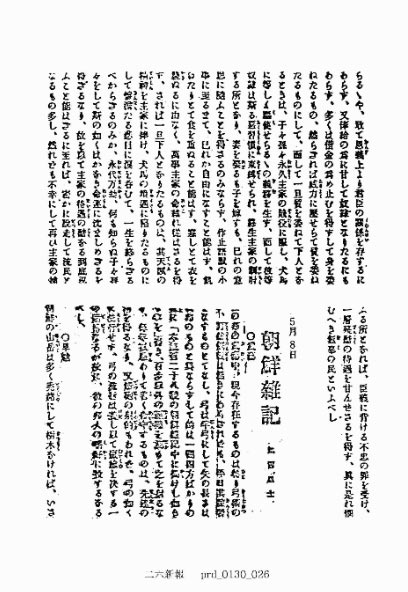
Before the modernization of the Joseon Dynasty following the opening of ports in 1876, the term 'Gungsul' (弓術) did not exist. It does not appear in the Annals of the Joseon Dynasty, the Diaries of the Royal Secretariat, the Records of the Border Defense Council, or any general literary collections from the Joseon era.
The Japanese term 'Gungsul' began entering Joseon around the time of the Gapo Reform in 1894. In an article titled "Joseon-japgi" (Miscellaneous Records of Joseon) published on May 8, 1894, in the Japanese daily newspaper Niju-roku Shinpo (founded in 1893), a writer using the pseudonym 'Yeosu-geosa' referred to Korean archery as 'Gungsul'.
The specific content is as follows:
"Among the martial arts of that country (Joseon), the only one currently existing is Gungsul. While they lack swords, spears, and rapiers, they practice daily. The bow is a short bow (Hangung), and the length of the arrow is no different from ours. They use a target on a board one kan square and shoot from a distance of over a hundred paces. Those who excel in the annual examinations may earn the title 'Seondal'. While rifle shooting exists, it is not as popular as the bow. Since archery is a gamble that determines victory or defeat, it suits the tastes of the people."
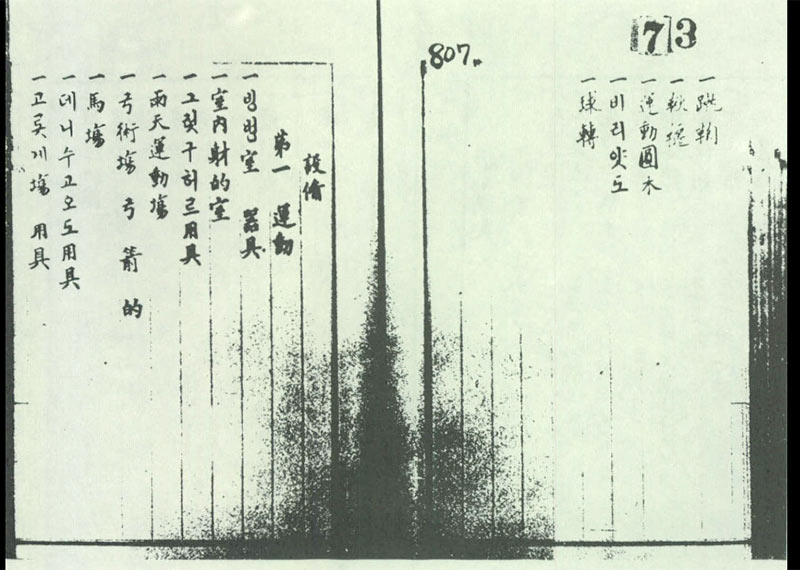
While it is unclear how many people read this at the time, it likely did not reach a wide audience. Additionally, the term 'Gungsul' appears in the Documents of the Residency-General (1904–1910) under the section "Daily Routine Regulations for the Great Emperor." In Article 4, it states: "Exercises shall include walking, games, horsemanship, and 'Gungsul' to promote physical health and mental refreshment." This record shows the Japanese using their own concept of 'Gungsul' to monitor and document King Gojong's activities during their interference in internal affairs.
Furthermore, facility listings included 'Gungsul-jang' (archery range), 'Gung' (bow), 'Jeon' (arrow), and 'Jeok' (target). As these were confidential documents between Japanese legations and the Ministry of Foreign Affairs, they were not easily accessible to Koreans at the time.
3. Introduction of the Term 'Gungsul' by Koreans
The first recorded use of the word 'Gungsul' (弓術) by a Korean occurred in 1907. The term first appeared in an article titled "Hygiene Q&A" (위생문답) by Park Sang-rak, published in the 8th issue (1907) of Taegeuk Hakbo (太極學報). This journal was the organ of the Taegeuk Hakhoe, a social and educational organization formed in 1905 in Tokyo, Japan, by students from Korea’s northwestern provinces. Taegeuk Hakbo had a significant reach, with 1,000 to 2,000 copies distributed not only within Korea (centered around Seoul and the northwest) and Japan but also to Korean communities in the United States via the Konglip Shinbo in San Francisco. Within its pages, archery was introduced as a modern physical education discipline as follows:
(Q) How should one practice physical education? (A) It is a well-known fact that the physical development of a person, shaped by the energy of the land (地靈), is largely completed by the age of twenty. Therefore, any youth who wishes to win the laurel wreath in the arena of social competition must not neglect appropriate physical education and exercise during their childhood, and parents should diligently encourage this. The types of physical education are as follows: military-style gymnastics, jujutsu, fencing, baseball, rowing, Gungsul (archery), gymnastics using apparatus, breathing fresh morning air, horsemanship, tennis, summer sea bathing, and lifelong cold-water bathing. These various exercises should be practiced appropriately for the best results.
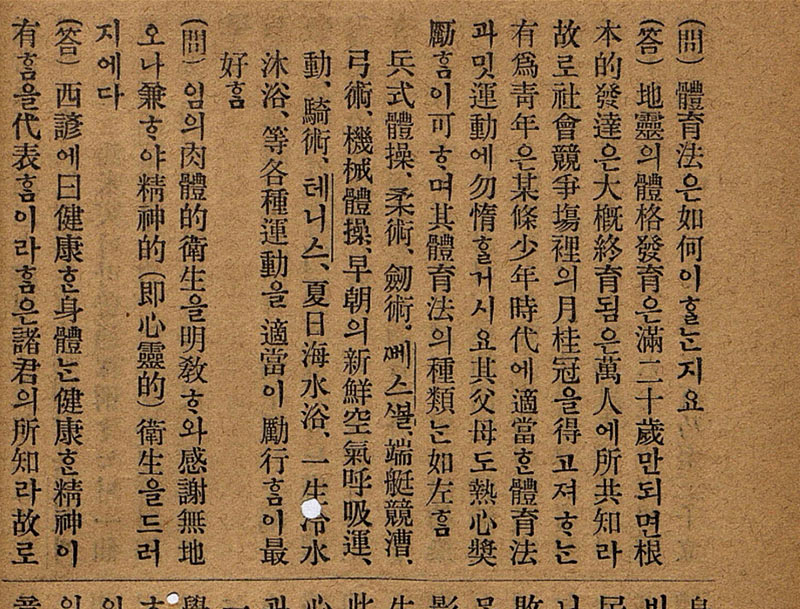
In this context, 'Gungsul' was categorized alongside Western-introduced modern sports such as baseball and rowing. While Taegeuk Hakbo was an enlightenment journal and not necessarily a mass-market publication for the general public, it was likely read by a significant number of the intelligentsia.
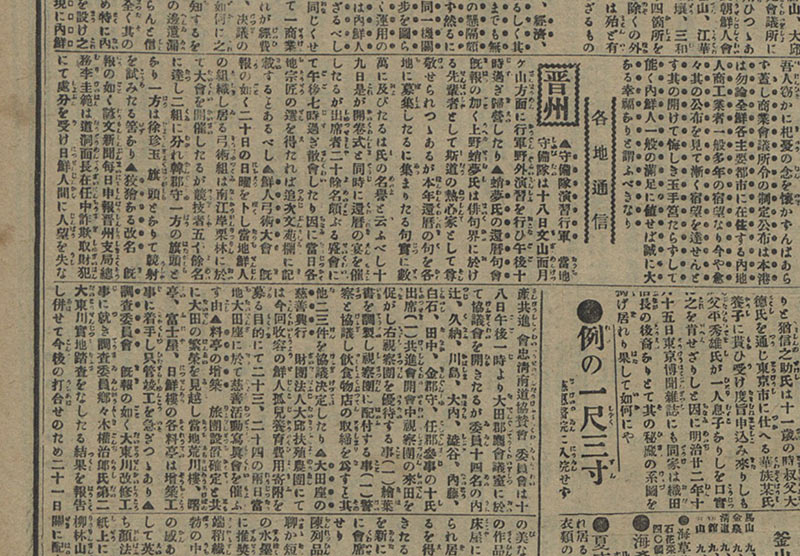
An article in the June 6, 1908 edition of Hwangseong Shinmun also reported, "The Gungsul-hoe (Archery Association) will open tomorrow at the Kyongsong Yacho-je-jeong Archery Range." The headline used the phrase "Opening of the Gungsul-hoe," while the body of the article referred to holding a "Gungsul-daehoe" (Archery Tournament). This is likely the first press record of an archery tournament using the term 'Gungsul.'
Hwangseong Shinmun, founded in 1898, was a private newspaper published in a mixture of Korean and Chinese characters. These records indicate that the word 'Gungsul' began to be known to the public through newspapers even before the 1910 annexation of Korea by Japan.
Later, news of archery tournaments continued, such as the "Gungsul-hoe at the Old Masan Archery Pavilion" in the Busan Ilbo (July 24, 1915) and the "Establishment of the Ulsan Gungsul-hoe" (September 2, 1915). It is likely that after the 1910 annexation, Koreans who learned Japanese gradually became more familiar with the term 'Gungsul.' The Busan Ilbo reported a total of 31 archery-related news items between 1915 and 1941. Furthermore, Maeil Sinbo, which served as an organ for the Governor-General of Korea, also introduced various events like the "Dongrae Gungsul Tournament" on May 12, 1918.
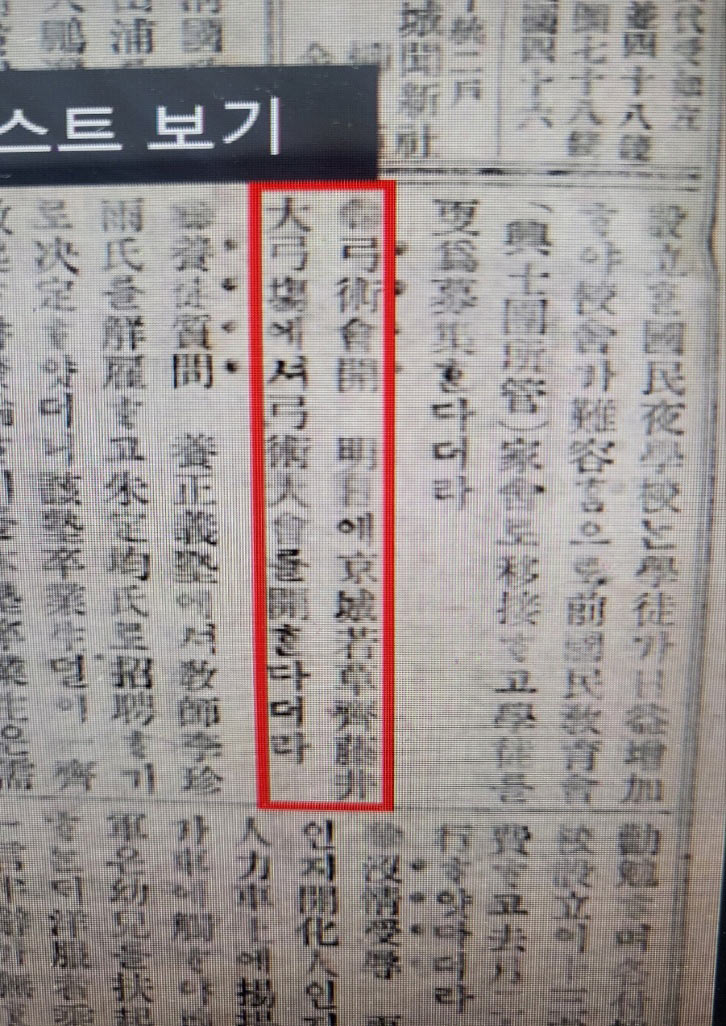
Following the March 1st Movement in 1919, the Japanese colonial government shifted from "Military Rule" to "Cultural Rule," leading to the founding of newspapers like Dong-A Ilbo and Chosun Ilbo in 1920. Dong-A Ilbo, in particular, covered numerous archery tournaments across the country. Its first report on April 22, 1920, titled "Kanggyung Gungsul-hoe Opening," noted that local leaders invited figures from various regions to hold a two-day event at Deogyujeong in Kanggyung. By 1921 alone, eight such tournaments were reported in locations like Jeonju, Byeokseong, Incheon, and Tongyeong. Consequently, the terms 'Gungsul' and 'Gungsul-daehoe' became common parlance among the general public.
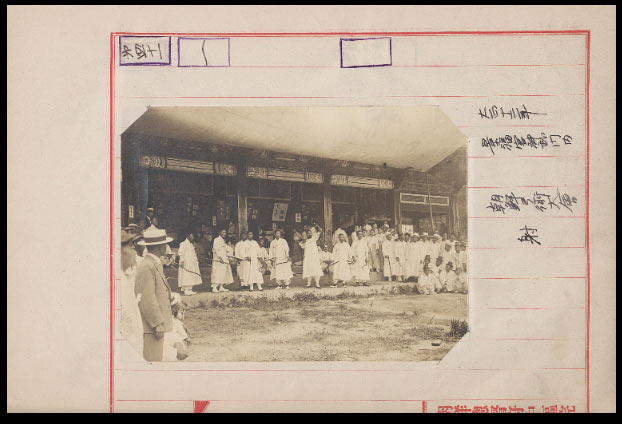
In October 1923, a "Kisaeng (Female Entertainer) Gungsul Tournament" held at Gyeongbokgung Palace proved immensely popular, attracting 22,458 visitors. Records show that the participants practiced daily at famous pavilions like Hwanghakjeong. This cemented 'Gungsul' as a term widely accepted by the public.
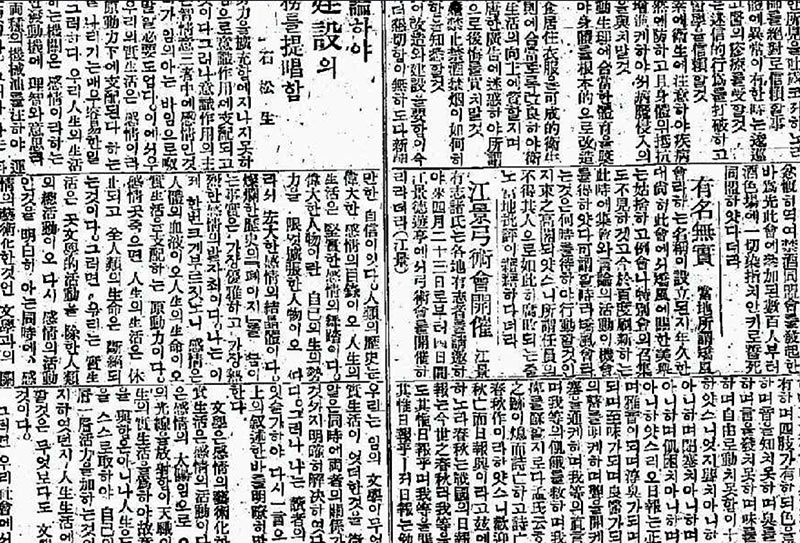
The title "All-Joseon Gungsul Tournament" began to be used in earnest from 1924, but the first truly representative national tournament was held in July 1928 at Hwanghakjeong, sponsored by Dong-A Ilbo. In its editorial, Dong-A Ilbo lamented that archery had lost its dignity as a martial art and had become a mere "accessory of the entertainment world." It urged the establishment of a central organization to restore the status of "Gungsul-do" (the way of archery) as an institution for national character building. This event led to the founding of the "Joseon Gungsul Research Association" in 1928, hosted by the YMCA.
This association was dedicated to researching and preserving traditional Korean archery during the colonial period, focusing on its technical, philosophical, and cultural significance. Their seminal work, The Gungsul of Joseon (1929), was primarily authored by the scholar Lee Jung-hwa with contributions from 36 master archers. To this day, it remains an indispensable resource covering the origins, history, equipment, and techniques of Korean archery. Ironically, while the book is a masterpiece of traditional archery, it does not explain the history of the term 'Gungsul' itself. At the time, 'Gungsul' was not an ancient traditional term but a new word influenced by Japan, which Korean archers voluntarily adopted for their organization and publication.
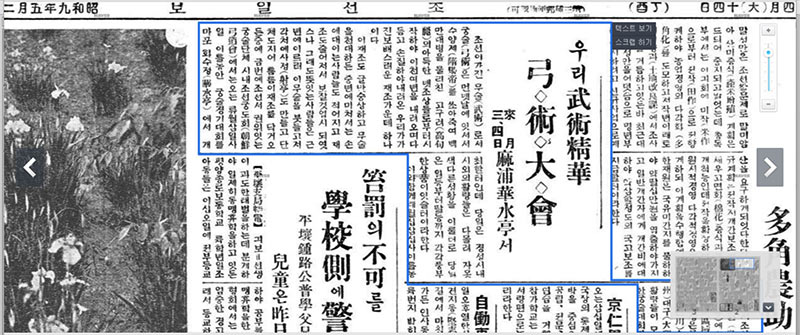
However, in May 1932, after holding the 3rd All-Joseon Gungsul Tournament, the Joseon Gungsul Research Association changed its name to the "Joseon Gungdo-hoe" (Joseon Archery Association). The exact reason for this name change remains unclear. Even in a 1938 Chosun Ilbo interview with Seong Mun-yeong, a founder of the association, the motive was not specified. Records show that the term 'Gungdo' had already appeared earlier, such as in a 1925 Chosun Ilbo report on the "4th Joseon United Gungdo-hoe" in Jeonju. By 1934, the terms 'Gungsul' and 'Gungdo' coexisted, as seen in reports titled "Our Martial Art Essence: Gungsul Tournament" hosted by the "Joseon Gungdo-hoe." From 1935 onward, the name 'Gungdo' began to appear as frequently as 'Gungsul.'
4. Conclusion
Within just twenty years of its first use by Koreans in 1907, 'Gungsul' became the representative term for Korean archery by 1928. Unlike 'Gungdo', which some people avoid as a Japanese remnant, 'Gungsul' was absorbed into our language without much resistance. Even today, many use 'Gungsul' thinking it is a purely traditional term.
Using 'Gungsul' is not inherently wrong, but we should be cautious when pairing it with words like 'traditional' or 'authentic'. It is similar to how many mistakenly believe the words 'Ppang' (bread) or 'Gabang' (bag) are pure Korean, when they actually came from Portuguese and Dutch via Japan.
The Joseon Gungsul Research Association changed its name to the Joseon Gungdo Association in 1932, four years after its founding. While the reason for the change is unclear, current research suggests it was not a forced change by the Japanese colonial government, as the association joined the Japanese-led Sports Association much later, in 1940. Ultimately, both 'Gungsul' and 'Gungdo' are terms that settled in Korea via Japan.